
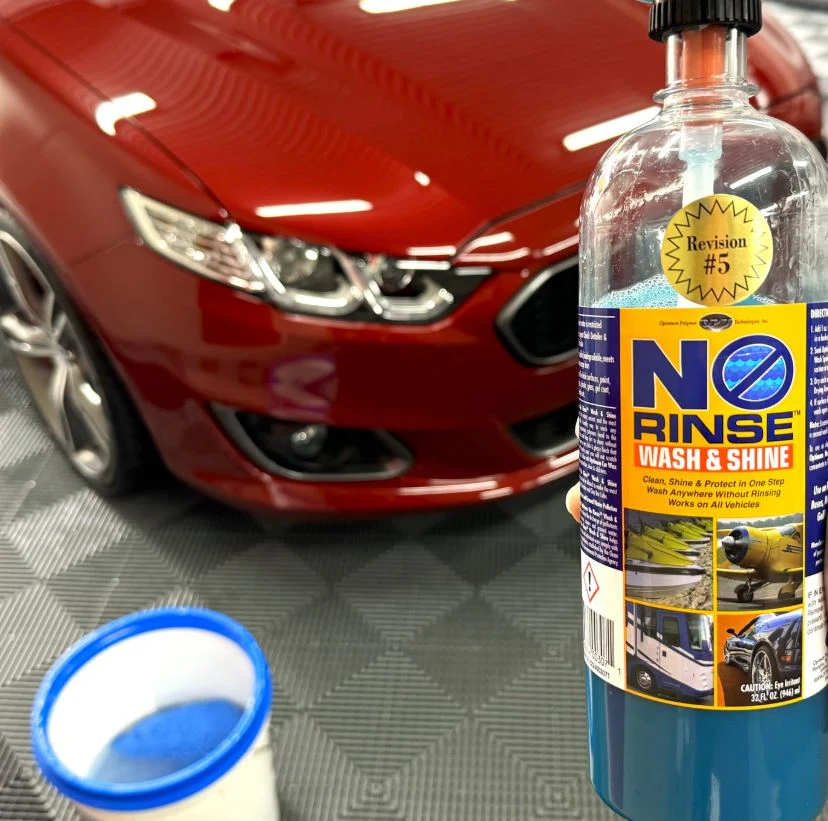
Often, washing a car means dragging out a hose, a bucket, and gallons of water that end up running down the driveway. Traditional washes and many detailing shops rely on foam sprays and heavy rinsing to get the job done. But there’s a smarter, more eco-friendly way to clean your car that saves water, protects your paint, and still gives professional results. This method is the rinseless wash (also known as a no-rinse car wash), and it’s quickly becoming a favorite among professional mobile detailers and car enthusiasts alike. At Bud Eco, this is one of our favorite methods for most of our exterior cleanings because it combines efficiency, safety, and sustainability.
What a Rinseless Wash Actually Does
A rinseless wash works differently from traditional soap and water. Instead of foaming up and needing to be rinsed away, it uses special polymers that encapsulate dirt, which ends up surrounding each particle and lifting it off the paint. Once the dirt is coated, it glides safely across the surface instead of scratching it. The polymers act like tiny lubricated barriers, letting a towel or sponge pick up debris without grinding it into the finish. The result is a clean, smooth surface without the need for high-pressure rinsing or running water.
This process is surprisingly safe when done right. Because the solution is highly lubricated, it reduces friction while you wipe. Each pass removes dirt while leaving behind a light protective film that enhances shine and adds a bit of slickness.
How to Apply It the Right Way
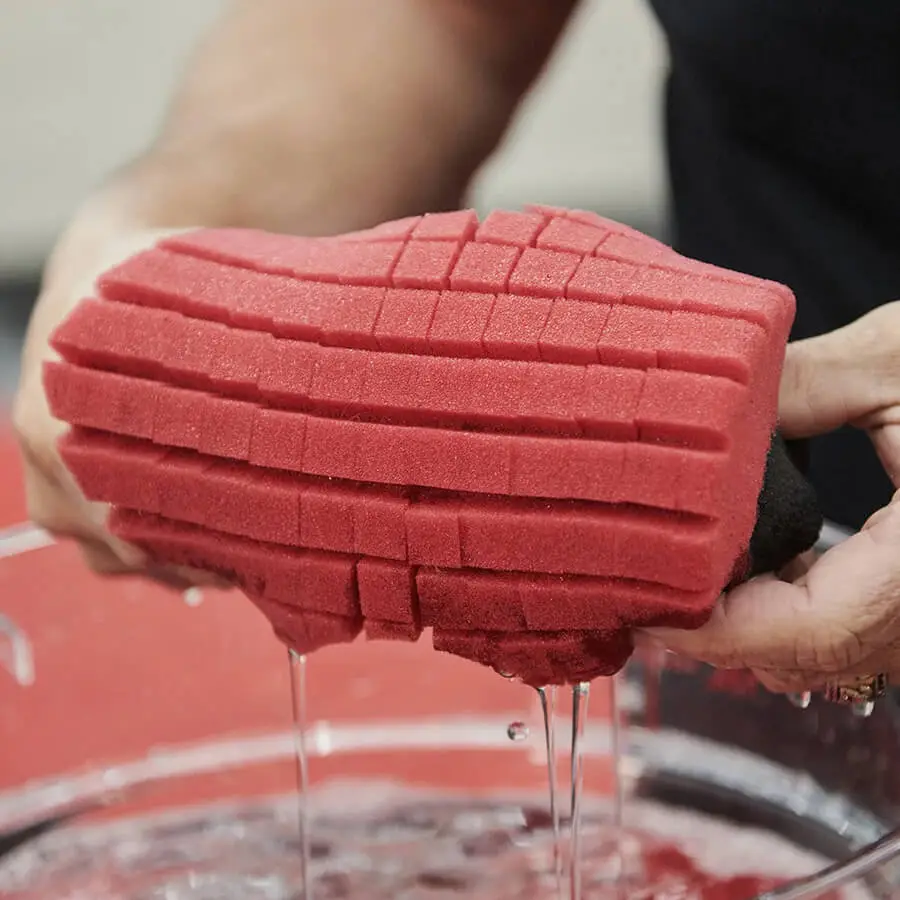
The rinseless wash method is simple once you understand it. You mix a small amount of the concentrated solution with a few gallons of water (usually about an ounce per bucket) then soak a special rinseless wash sponge in the mixture. The key is that this sponge isn’t like the rough, open-pore sponges people used to use on cars. Those traditional ones trap dirt and drag it across the paint, causing micro-scratches.
A rinseless sponge, on the other hand, has cuts in it that grants it a unique honeycomb structure with flexible pores that pull dirt into the sponge and away from the paint. Combined with the lubricating wash solution, it lets you glide over the surface gently, then safely release the dirt when you rinse or squeeze the sponge in the bucket. Its design is what makes this method both efficient and safe. The sponge and solution work together to clean without causing swirls or scratches. It’s a method that fits perfectly with mobile detailing because it’s easy to set up anywhere with no running water required.
Why It’s Better for the Environment
One of the biggest advantages of using a no-rinse method is how much water it saves. A traditional driveway wash can use anywhere from 20 to 80 gallons of water, most of which runs off carrying soap, oils, and dirt into the street and storm drains. A rinseless wash, on the other hand, uses just a few gallons (around 5) for the entire vehicle. The waste water stays contained, which makes it ideal for mobile detailers, apartment complexes, and drought-prone areas.
Beyond water conservation, it’s also less wasteful overall—no hose runoff, no need for multiple buckets, and no harsh chemicals entering the environment. It’s a small change that makes a big difference, especially in a city like Austin, where sustainable practices matter.
Why We Use It
The no-rinse method isn’t simply about cutting corners by using less product and equipment. It’s about working smarter and more responsibly. It lets you clean vehicles anywhere, anytime, without wasting resources or risking paint damage. When done with care, it gives results that match or even surpass traditional methods. Whether you’re maintaining your car at home or looking for professional mobile detailing in Austin, the no-rinse method is one of the most effective, eco-friendly ways to keep your car looking freshly detailed year-round.